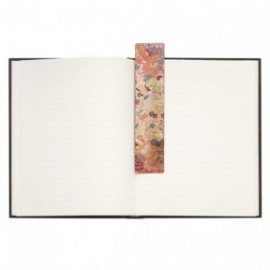
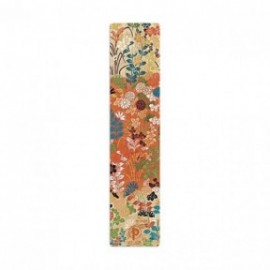
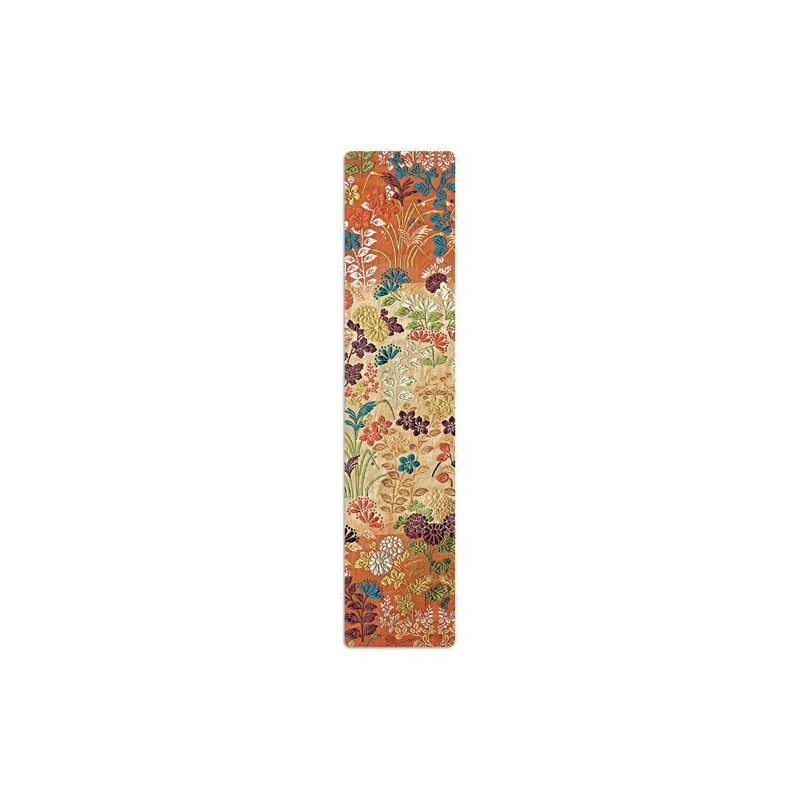
Paperblanks Bookmark Kara Ori
.
Paperblanks Bookmark Kara Ori
Κωδικός:
9781439793244
€3,95
€3,56
Έκπτωση 10%
με ΦΠΑ
Info
Οι φόροι θα υπολογιστούν στο τελευταίο βήμα του καλάθι σας
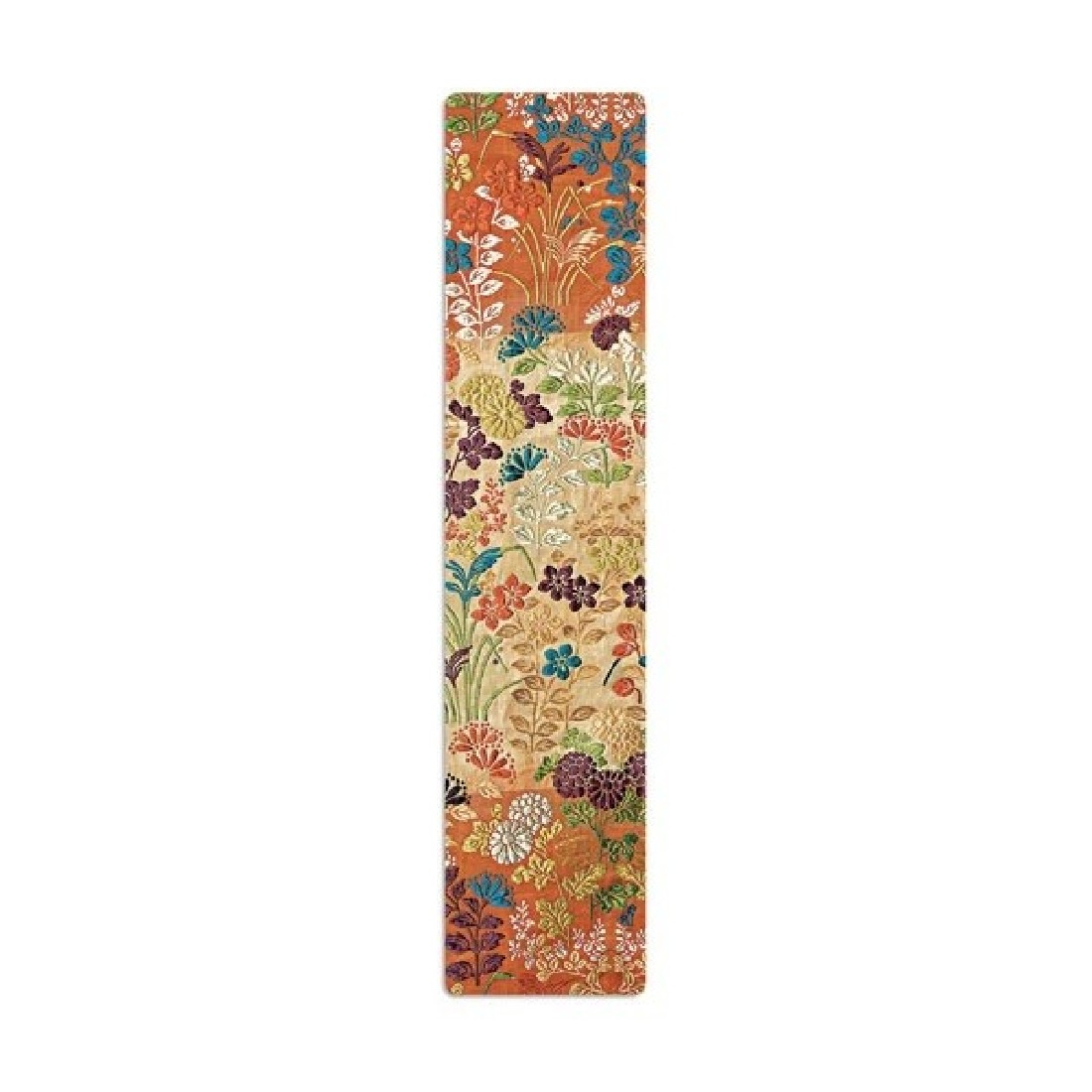
Showcasing silk dyed with beni (the pigment extracted from safflower petals) and lacquered in gold, this kimono design dates to the Edo period (1615–1868), when it was used as a costume for the theatrical style known as Noh. Karaori refers specifically to the exquisitely embroidered traditional woman’s kimono that Noh theatre was known for.
FORMAT: Bookmark
SIZE:
Width: 40mm (1½")
Height: 185mm (7?")
Depth: 1mm (")
MORE FEATURES:
*Decorative printed paper
*Double-sided designs
*Textured printing
*Rounded edges
*Subtle Paperblanks branding
Harmonious flowers, balanced colours and highly precise details create the eye-catching, high-impact effect of this Japanese kimono design.
Originally designed as a costume for the theatrical style known as Noh, our Kara-ori pattern leaves little doubt why Noh is derived from the words for “skill” and “talent.” With silk and gold lacquered stripes, this is one of the best examples of Japanese textile design we have found. It comes from the Edo period (1615–1868) when Noh theatre, known for the sumptuousness of its costumes, was at its height.
Noh theatre is one of the world’s oldest performing arts and has been handed down through generations of Japanese composers and performers. The plots draw from legend, history and contemporary events and are structured around song and dance. Though the thematic tone is often poetic yet monotonous, the costumes are anything but. In fact, Noh is often referred to as “mask drama” due to the importance placed on masks and costumes within the form.
The term karaori, for which this design is named, refers specifically to the exquisitely embroidered traditional woman’s kimono like the one reproduced here. Karaori are regarded as some of the most beautiful theatrical costumes in the world, thanks in part to the Japanese aristocracy’s embrace of the theatre style – as both viewers and performers.