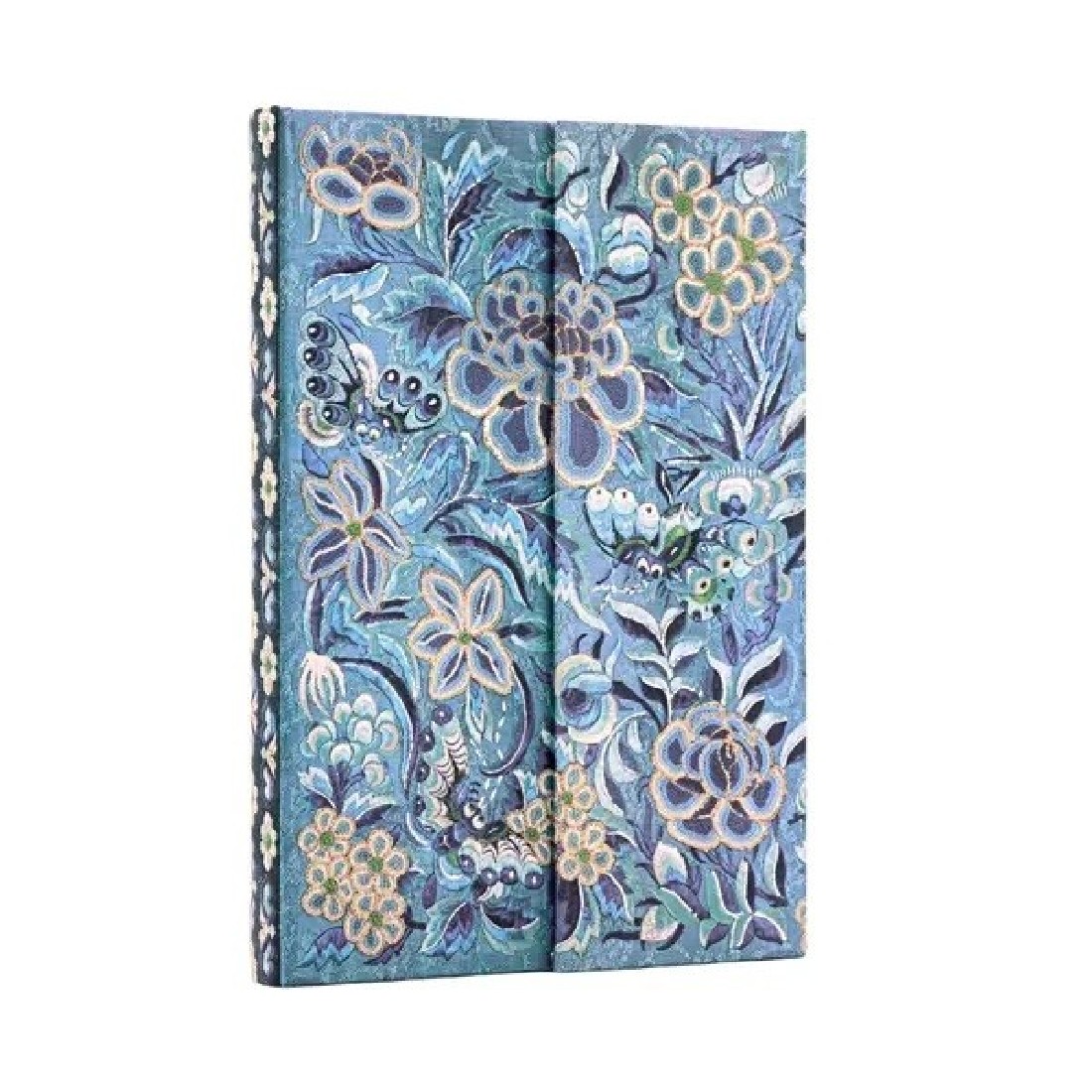
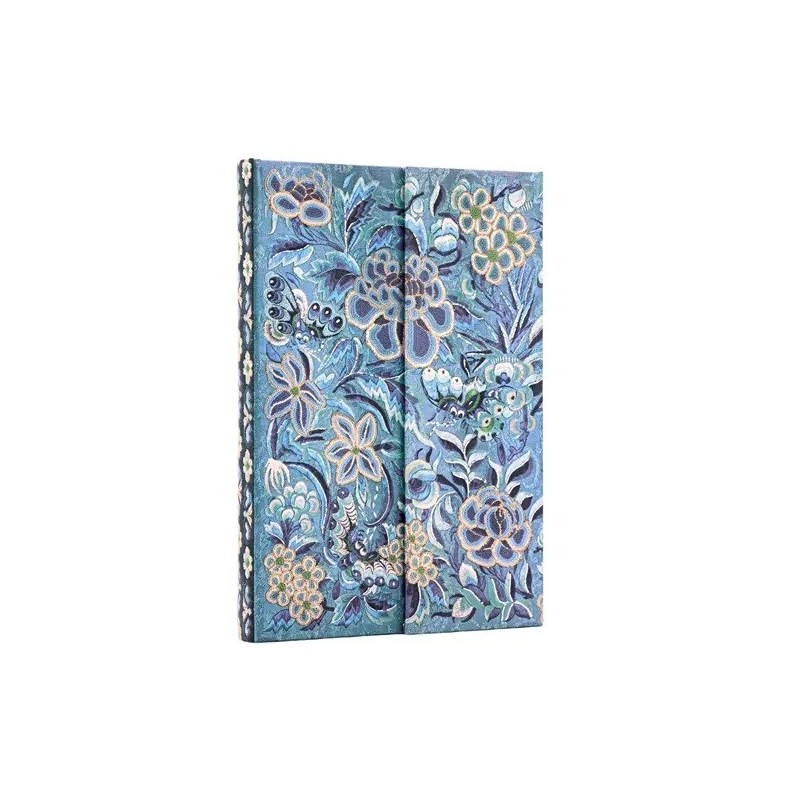
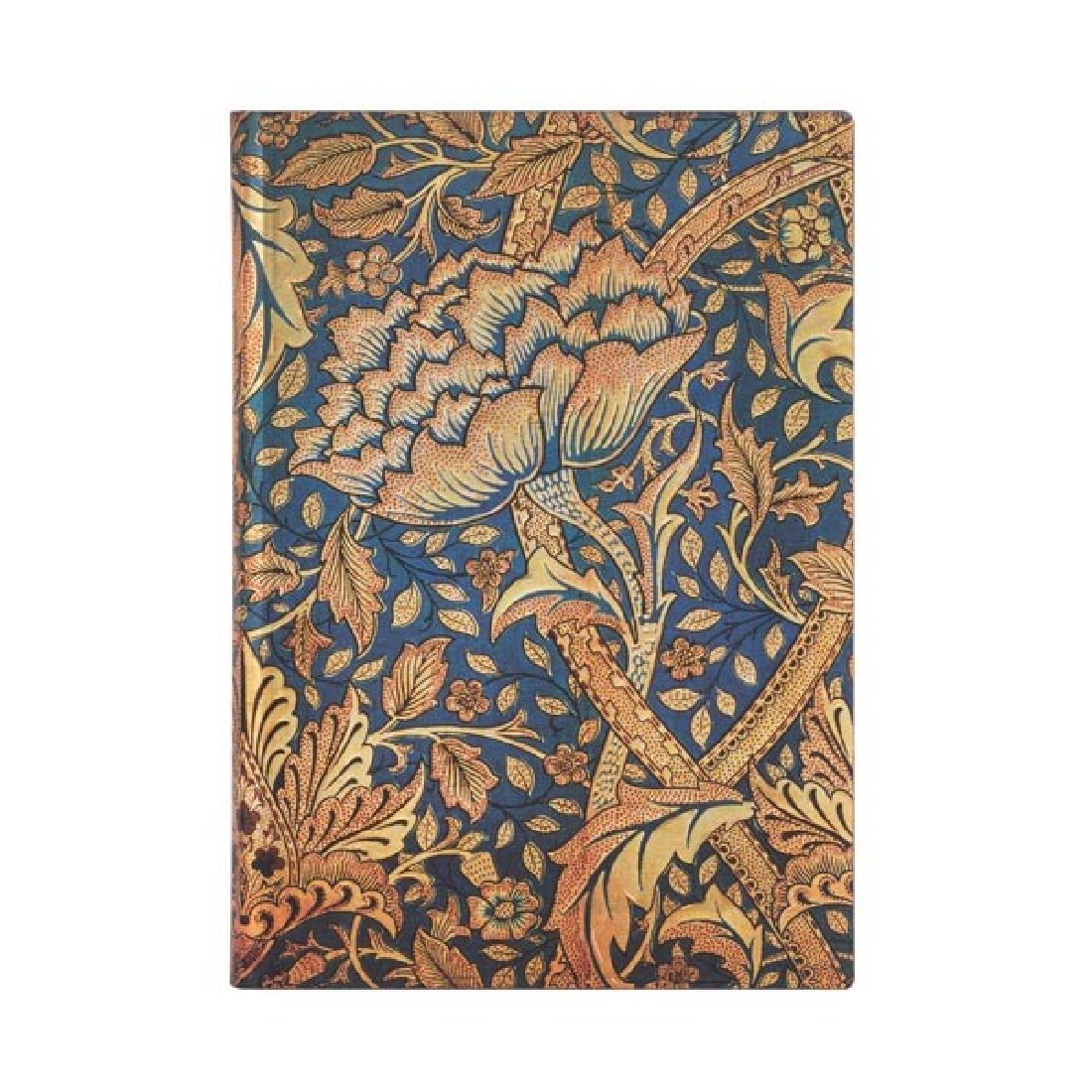
The design reproduced here is taken from a panelled skirt known as a mamianqun, a garment worn by Han Chinese women in the traditional Hanfu dress style. Hanfu dates back more than three millennia to the Song and Liao dynasties, when it became popular due to both its functionality and its aesthetic style.
Format: Midi
Size:
Width: 125mm
Height: 180mm
Depth: 20mm
Interior: Lined
Space between lines:6.67mm
Lines Per Page:21
Page Count: 144 Pages
Closure: Wrap
Colour: Blue
GSM (paper weight): 120
Cover: Hardcover
Edge Printing: Yes
Binding Type: Smyth Sewn
Pouch Type: Memento Pouch
Interior Paper
Custom-designed laid paper
Ribbon Markers.: 1
More Features
100% recycled binder boards
Decorative printed cover paper
FSC-certified text paper
Threaded stitching and glue, as needed
Acid-free sustainable forest paper
The beauty of Chinese embroidery is exquisitely represented on our Blue Willow cover. The design reproduced here is taken from a panelled skirt called a mamianqun, or “horse face” skirt, a garment worn by Han Chinese women in the traditional dress style known as Hanfu. An ancient form of Chinese clothing, Hanfu dates back more than three millennia to the Song and Liao dynasties, when it became popular due to both its functionality and its aesthetic style.
Originating in the Qing Dynasty (1850–1900), the variation of mamianqun on our cover is called a langaqun, a style characterized by its sharp pleats, often trimmed in black. Shown here is an example made from delicate pale blue silk damask, embroidered in golden silk thread and edged with silk satin.
Hanfu style has shaped the traditional clothing of many cultures including the Korean hanbok and the Japanese kimono. The mamianqun in particular has undergone various changes throughout history, surviving multiple dynasties and going on to influence style in the Western world by finding its way into the pages of Vogue and onto fashionable British royalty.