- -10%

Taxes will be calculated on the final step of your checkout
Format: A6
Size:
Interior: Lined
Page Count: 80 Pages
Closure: No Closure
Colour: Red
Paper Weight (GSM): 100
Cover: Hardcover
Edge Printing: Yes
Binding Type: Saddle Stitched
Additional Features:
About This Design:
Design Inspiration:
Wolfgang Amadeus Mozart (1756–1791) was one of the most prolific and influential composers of the Classical era. Born in Salzburg, Austria, his musical talent emerged early, making him a highly sought-after child prodigy. While his youth captivated audiences, it was his music—operas, piano concertos, symphonies, string quartets, and quintets—that truly entranced listeners.
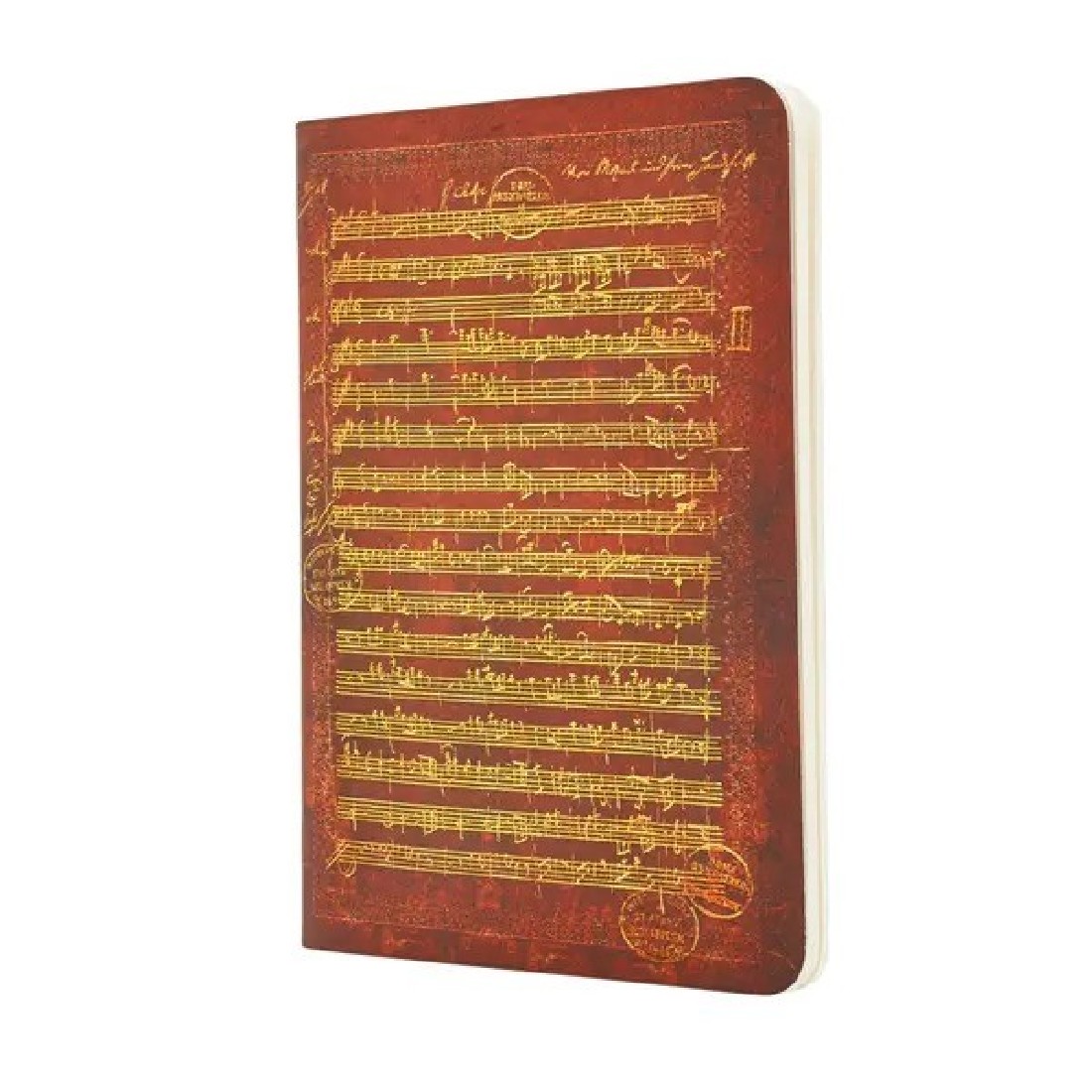
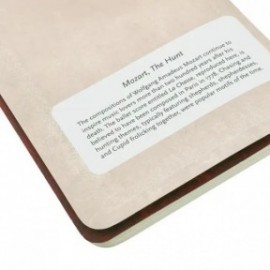
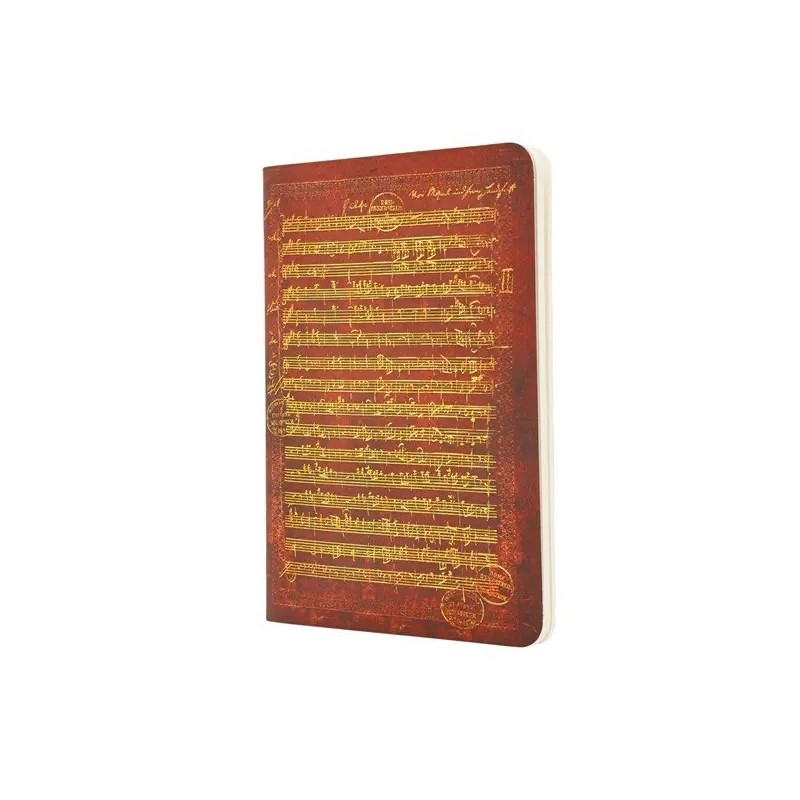
The music reproduced on this notebook cover comes from a ballet score known as La Chasse (KV 300 [299d]), composed by Mozart in Paris in autumn 1778. Themes of chasing and hunting, often featuring shepherds, shepherdesses, and Cupid, were popular in Mozart’s time, and the subtle erotic subtexts made ballet and pantomime appealing to many audiences. Interestingly, there are two separate compositions by Mozart known as The Hunt, the other being a 1784 string quartet dedicated to Haydn.
Today, only a fragment of La Chasse survives—a scrap of paper ruled with 16 staves. Much credit goes to Ludwig von Kochel, who catalogued Mozart’s works following his death in 1791. His 551-page catalogue, published in 1862, remains the foundational system for identifying Mozart’s compositions, known as the “K” numbers, though later revisions have been made.
Over 200 years after his death, Mozart’s music continues to inspire people across the world, evoking passion, rapture, and serenity. These technically brilliant compositions have a universal appeal and have influenced countless composers and musicians throughout history.
10 other products in the same category: